
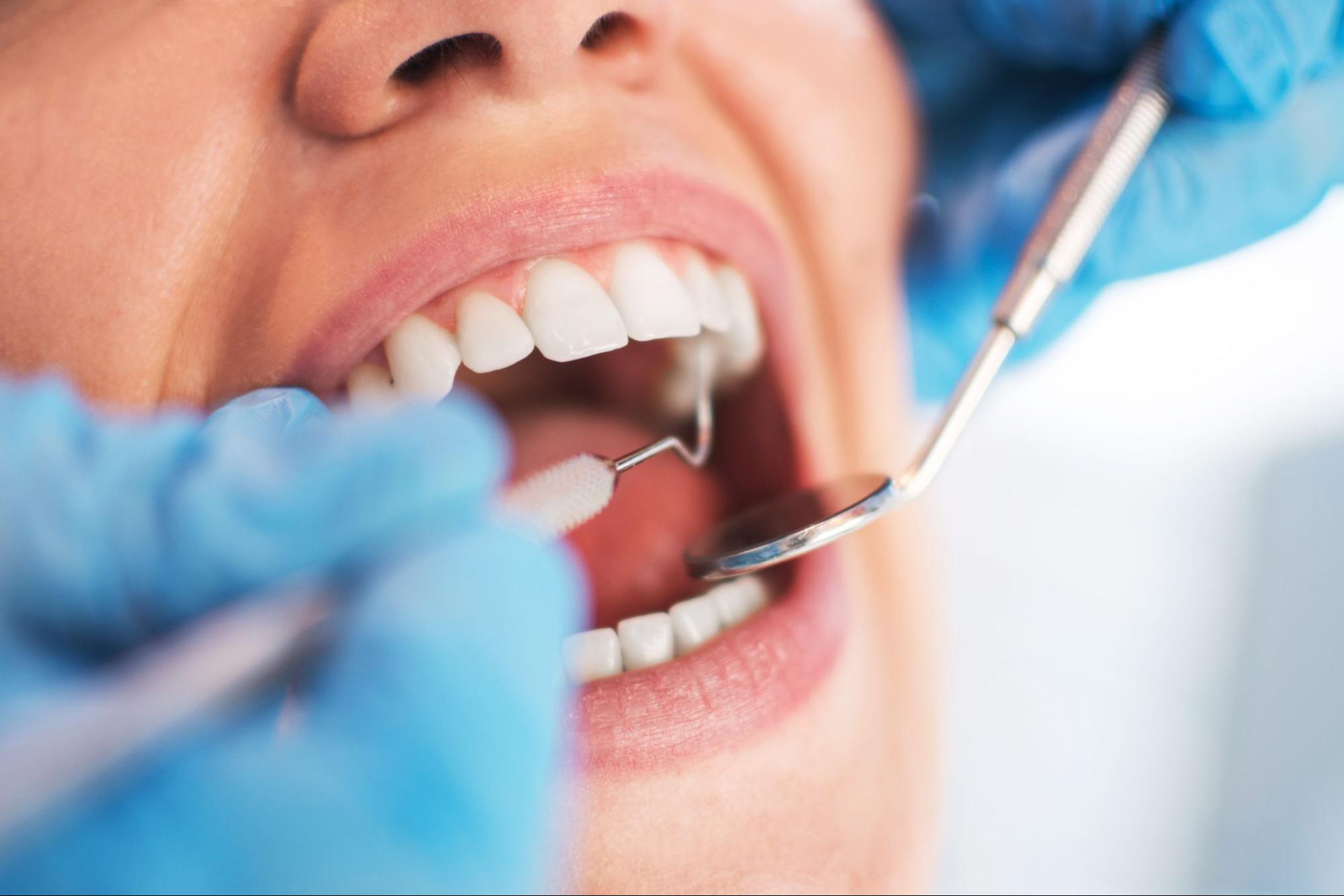
This guide walks you through every step of an orthodontic consultation, from check-in paperwork to the moment you see your personalized treatment plan. Knowing what’s coming makes that first visit feel a lot easier, especially if you’re bringing a nervous seven-year-old along. Here’s how a free consult works at LakePointe Orthodontics.
What Is an Orthodontic Consultation?
An orthodontic consultation is an exam and records visit where an orthodontist evaluates how your teeth, bite, and jaws fit together, then explains your treatment options. Nothing invasive happens. Most visits run 45 to 60 minutes and include a clinical exam, digital scans or X-rays, a diagnosis, and a review of appliance choices.
You leave with information, not an obligation. Many practices, including ours, offer this first visit at no cost, and some offer a virtual option using photos you take at home.
Bring your questions with you, too. There’s no such thing as one that’s too small, and we would much rather answer it while you’re sitting with us than leave you wondering about it later that week.
This visit works for every age group:
- Children as young as seven, to check jaw growth and incoming permanent teeth
- Teens, once most adult teeth have come in
- Adults, including anyone whose teeth shifted years after braces
Think of it as a fact-finding visit. You ask questions, we answer them, and you decide what happens next on your own timeline.
What Happens Step by Step at Your Free Consult
Your free consult follows six steps. You’ll check in and finish paperwork, have a clinical exam of your teeth and bite, and get digital records that include a 3D scan and X-rays. After that comes your diagnosis in plain language, a personalized treatment plan, and a financial review.
Step 1: What happens at check-in?
Bring a photo ID, your insurance card, and any referral or records from your dentist. Our team handles the health history form with you, so you’re not stuck guessing at medical terminology in a waiting room.
Step 2: What does the clinical exam cover?
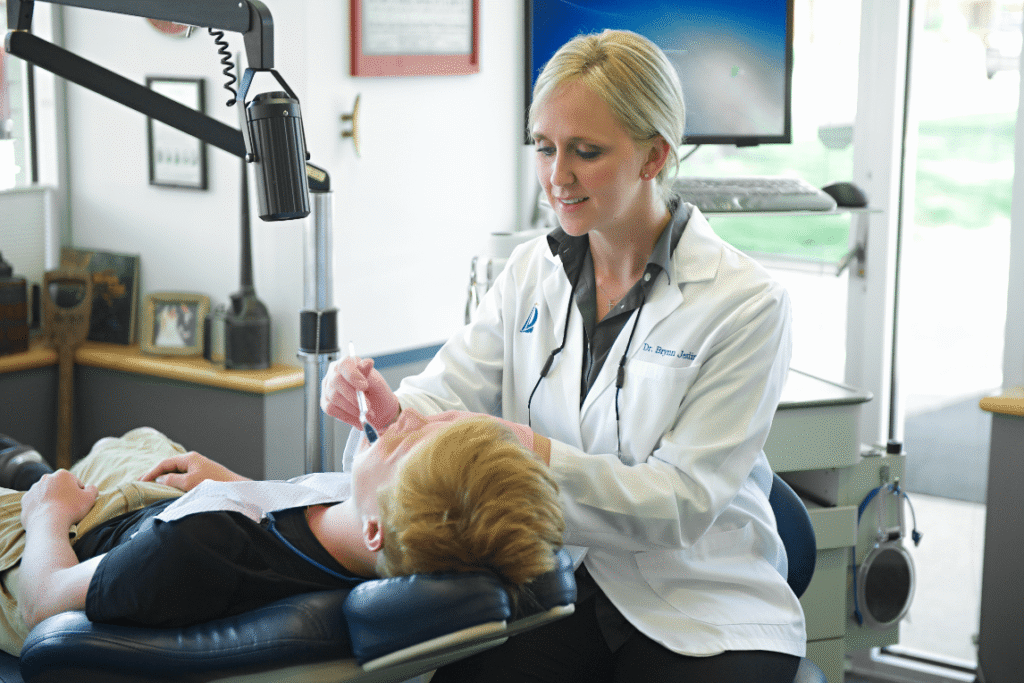
One of our orthodontists looks at your teeth, how your bite comes together, your jaw joints, and your facial profile. We check for crowding, spacing, crossbite, open bite, and any teeth that haven’t erupted the way they should.
Step 3: What digital records do we take?
We use a digital scanner instead of goopy impression trays. A few minutes of scanning gives us a 3D model of your teeth. We also take photos and low-radiation digital X-rays, which show roots, developing teeth, and jaw structure that a regular exam can’t show.
Step 4: How is your diagnosis explained?
Here’s where the scan pays off. We put your images on screen and walk you through what we see, using your own teeth as the visual aid. No jargon dumps. If something needs attention, you’ll understand exactly why.
Step 5: What’s in your personalized treatment plan?
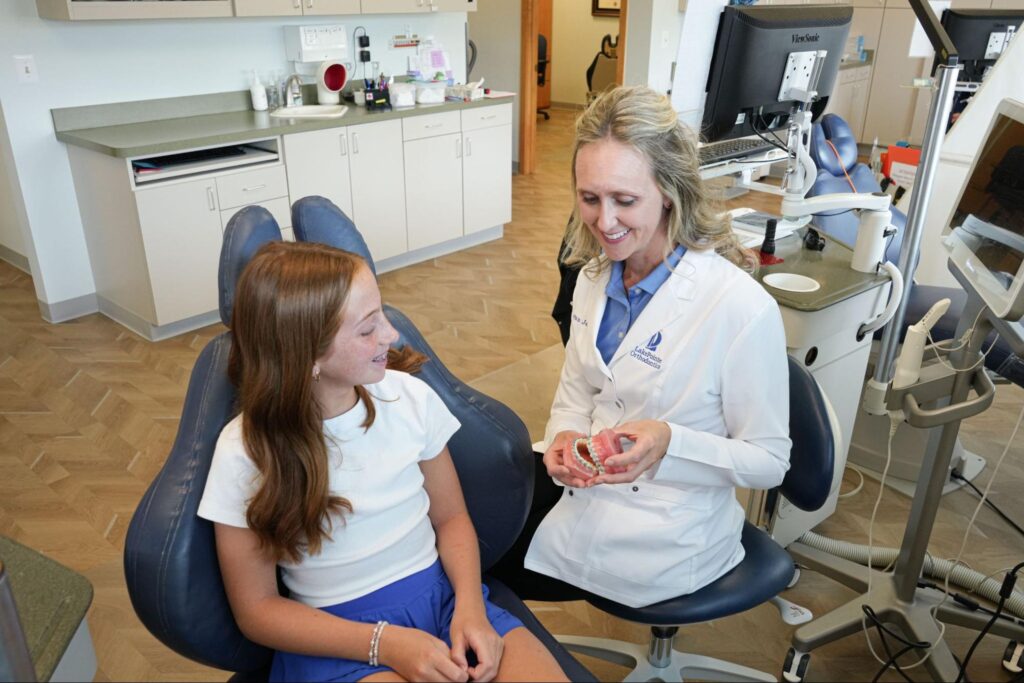
We lay out the options that fit your case, whether that’s metal braces, clear braces, clear aligners like Invisalign, or a growth-guiding appliance such as an expander. You’ll hear the estimated timeline for each and how visit frequency compares.
Step 6: What does the financial review include?
Our treatment coordinator checks your orthodontic insurance benefits and walks you through financing options that fit your situation. If you’re ready to start, we schedule. If you’d rather think it over, that’s completely fine.
Why Your Free Consult Matters
Guessing about your bite gets expensive. A free consult replaces guesswork with an actual diagnosis, and that changes every decision that follows. At LakePointe Orthodontics, we would rather spend an hour explaining your options in detail than have you agree to something you don’t fully understand.
Here’s what this visit gives you:
- An accurate diagnosis. Crowding that looks minor from the front can hide an impacted tooth or a root position issue that only X-rays show.
- Side-by-side options. You compare appliances, timelines, and daily wear requirements before you commit to anything.
- Early detection. Crossbites, narrow arches, jaw growth concerns, and impacted teeth are far simpler to manage when caught early, and early action often keeps treatment shorter later on.
- A timeline you can plan around. You’ll know what to expect and when, with no surprises halfway through treatment.
- Zero pressure. You can walk out, talk it over at dinner, and call us next month. The plan will still be here.
Parents often tell us the biggest relief is simply having answers. Once you know whether your child needs treatment now or just monitoring, the worry drops away. Adults describe the same feeling after years of wondering whether anything could be done about a tooth that has bothered them.
Consultation Types: In-Office vs. Virtual Consult
Both options get you real answers from an orthodontist. The difference comes down to how much detail we can gather.
| Feature | In-Office Consult | Virtual Consult |
|---|---|---|
| Time needed | 45 to 60 minutes | A few minutes to submit photos |
| Records taken | Clinical exam, 3D digital scan, photos, low-radiation X-rays | Photos you take at home with your phone |
| What you get | Full diagnosis and same-day treatment plan | A candidacy screening and general option overview |
| Best for | Anyone ready for a definitive plan, kids needing growth evaluation, complex bites | Busy schedules, first-time curiosity, checking if aligners could work for you |
A virtual consult is the fastest way to learn whether you’re a candidate. Most people who start this way still come in for one records visit, since a diagnosis needs X-rays and a scan.
Getting a second opinion? Bring what you have. Ask your previous provider for copies of your X-rays, digital scans or impressions, progress photos, and the written treatment plan. Those records save time and let us compare approaches honestly instead of starting from scratch.
Who Should Schedule a Free Consult and When
Per American Association of Orthodontists (AAO) guidelines, every child should have a first orthodontic evaluation by age seven. At that age, enough permanent teeth have come in for us to spot developing bite issues while the jaw is still growing.
Timing by age group:
- Children (age 7 and up). An early check doesn’t mean early braces. Most kids simply get monitored every 4 to 6 months so we can act at the right moment.
- Teens. The ideal window opens once most permanent teeth have erupted, usually between ages 11 and 14.
- Adults. Crowding that worsened over time, teeth that shifted after childhood braces, and uneven wear from a poor bite are the three reasons we hear most.
Don’t wait for a birthday if you notice any of these:
- Crowded or overlapping teeth
- Noticeable gaps
- Trouble chewing or biting
- Jaw soreness or clicking
- Mouth breathing or persistent snoring
- Baby teeth lost unusually early or late
No referral is required. You can schedule your free consult yourself, though we’re always glad to coordinate with your family dentist.

Frequently Asked Questions About Orthodontic Consultations
How long does an orthodontic consultation take?
Plan on 45 to 60 minutes. That covers check-in, the clinical exam, digital records, your diagnosis, and the financial review. If you’re getting a second opinion with records already in hand, the visit often runs shorter.
What should I bring to my first orthodontic visit?
Bring a photo ID, your dental insurance card, and any referral notes or records from your dentist. If you’ve had orthodontic treatment before, bring copies of those X-rays and treatment notes. Parents should bring a list of questions, since it’s easy to forget them once the conversation starts.
Will I get braces or Invisalign on the same day?
Sometimes, yes. If your case is straightforward, your records are complete, and you’re ready to move forward, we can often begin the same day. Aligner cases require lab fabrication after your scan, so those start at a follow-up visit a few weeks later. Either way, you’ll know exactly what the next visit looks like before you head home.
Do free consults include X-rays, and are they safe?
Most do, because X-rays show roots, unerupted teeth, and jaw structure that a visual exam can’t. We use digital imaging, which requires far less radiation than older film systems, along with protective shielding. If you’ve had recent X-rays elsewhere, we can often use those instead.
Does my child need a referral from a dentist?
No. Orthodontists are dental specialists you can see directly, and you’re welcome to schedule on your own. Many families come to us on a dentist’s recommendation, and we happily share findings with your dentist so everyone stays on the same page.
What questions should I ask the orthodontist?
Good ones to have ready: What’s causing my bite issue? Which appliance options fit my case, and what are the tradeoffs? How long will treatment take? How often are visits? What’s the total cost, and what does my insurance cover? What happens if I need a retainer afterward? A thorough answer to each is a sign you’re in good hands, and a rushed one tells you plenty as well.
Whenever you’re ready with your list, our fun, friendly, & caring team is here to answer every question on it. Schedule your free consult, and let’s talk about smiles that last a lifetime. Your family’s smiles are our top priority.